
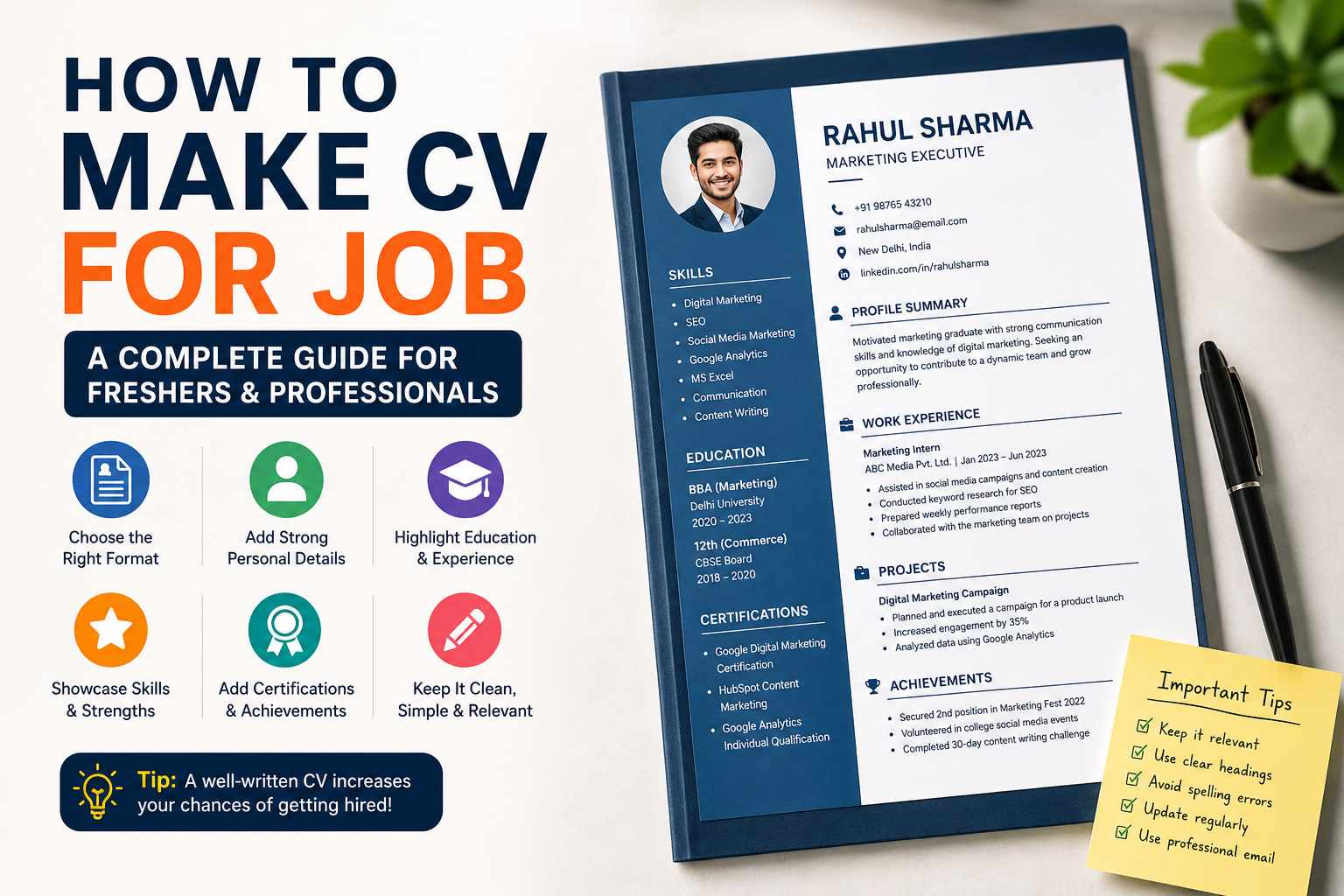
Your CV is often the first impression you make on a recruiter. Even if you have excellent skills and qualifications, a poorly written CV can reduce your chances of getting shortlisted for an interview.
Many job seekers spend hours applying for jobs but receive very few responses because their CV does not effectively showcase their strengths. A well-structured CV helps recruiters quickly understand your skills, education, experience, and achievements.
In this guide, you will learn how to make a CV for a job, what sections to include, common mistakes to avoid, and practical tips that can help you get noticed by employers.
What Is a CV?
A CV (Curriculum Vitae) is a professional document that highlights your educational background, work experience, skills, certifications, and achievements.
Recruiters use CVs to evaluate whether a candidate is suitable for a particular role before inviting them for an interview.
A good CV should be:
- Clear and professional
- Easy to read
- Relevant to the job role
- Free from grammatical errors
- Updated with current information
Why Is a Good CV Important?
Your CV plays a major role in your job search because it helps recruiters decide whether to shortlist you.
Benefits of a strong CV include:
- Better interview opportunities
- Higher chances of getting shortlisted
- Professional first impression
- Better visibility in applicant tracking systems (ATS)
- Increased confidence during job applications
Basic Structure of a Professional CV
Personal Information
Start your CV with basic details.
Include:
- Full Name
- Mobile Number
- Professional Email Address
- City and State
- LinkedIn Profile (optional)
Avoid including unnecessary details such as:
- Religion
- Marital Status
- Aadhaar Number
- Passport Number
Professional Summary
A professional summary is a short introduction about yourself.
Example:
“Motivated graduate with strong communication skills and basic digital marketing knowledge. Looking for opportunities to contribute to a growth-oriented organization while developing professional expertise.”
Keep it concise and relevant.
Educational Qualifications
Mention your educational background in reverse chronological order.
Example:
Bachelor of Commerce
XYZ University, Delhi
2022 – 2025
Higher Secondary Education
ABC Senior Secondary School
2020 – 2022
Skills Section
Recruiters often scan the skills section first.
Examples of useful skills:
Technical Skills
- MS Excel
- SEO
- Python
- HTML/CSS
- Graphic Designing
Soft Skills
- Communication
- Teamwork
- Leadership
- Time Management
- Problem Solving
Work Experience
If you have previous experience, include:
- Job Title
- Company Name
- Duration
- Key responsibilities
Example:
Digital Marketing Intern
ABC Media Pvt Ltd
- Assisted in SEO optimization
- Created content for blogs
- Managed social media campaigns
- Generated weekly performance reports
Internship Experience
Freshers should highlight internships and training programs.
Even short internships demonstrate practical exposure and learning ability.
Certifications
Professional certifications can strengthen your CV.
Examples:
- Google Digital Marketing Certification
- Microsoft Excel Certification
- HubSpot Content Marketing Certification
- AWS Cloud Fundamentals
Projects
Projects help demonstrate practical skills.
Example:
E-Commerce Website Project
- Developed using HTML, CSS, and JavaScript
- Implemented responsive design
- Improved user experience and navigation
Achievements
Include relevant accomplishments such as:
- Academic awards
- Competition wins
- Certifications
- Leadership roles
How Long Should a CV Be?
Freshers
1 page is usually enough.
Experienced Professionals
1–2 pages are recommended.
Avoid making your CV unnecessarily long.
Common CV Mistakes to Avoid
Using Generic Templates
Many candidates use identical templates that fail to stand out.
Including Irrelevant Information
Only include information relevant to your target job role.
Spelling and Grammar Errors
Proofread carefully before sending your CV.
Using Unprofessional Email Addresses
Example to avoid:
Use professional formats such as:
Not Customizing the CV
Tailor your CV according to the job requirements whenever possible.
ATS-Friendly CV Tips
Many companies use Applicant Tracking Systems (ATS).
To improve ATS compatibility:
- Use simple formatting
- Include relevant keywords
- Avoid excessive graphics
- Use standard headings
- Save as PDF unless otherwise requested
Best Practices Before Applying
Before submitting your CV:
- Update contact details
- Review spelling and grammar
- Add recent skills and certifications
- Check formatting consistency
- Save the latest version
Where to Find Jobs After Creating Your CV
After preparing your CV, start applying through trusted job portals.
You can explore opportunities on:
- JobsAtNearMe
- Naukri
- Indeed
- Internshala
Regular applications increase your chances of receiving interview calls.
Conclusion
Learning how to make a CV for a job is one of the most important steps in your career journey. A professional CV helps recruiters understand your qualifications, skills, and potential within a few seconds.
Whether you are a fresher searching for your first job or an experienced professional planning a career move, investing time in creating a strong CV can significantly improve your job search results.
Keep your CV updated, focus on relevant achievements, and customize it according to the job role. A well-crafted CV can open the door to better career opportunities and faster hiring.